Why capable adults feel stuck in mid-life
(Even When Life Looks Fine)
If you’re in midlife and feeling stuck, I don't think it's always about feeling like you've "failed" it's more like an unanswered question: frustrating. I hit 40 in 2020 and yes, you could argue that they were some strange old times but it felt like a giant wave of "philosophical" hit and I wasn't sure how to ride it.
Everyone I work with is doing objectively well. They’re competent, reliable, often high-performing. CEO's, CMO's, Directors, Consultants, Doctors...they have careers, families, responsibilities, and a reputation for getting things done. From the outside, life looks better than fine.
And yet, underneath that competence, there’s a quiet sense of friction. Decisions feel heavier. Energy feels harder to access. Cross-roads start to appear. The question “What’s next?” starts looping without a clear answer. Not dramatically. Just persistently.
I feel like it's a part of the developmental process of adulting that's emerging as an "ok" thing to talk about these days. No more mid-life crisis, more mid-life awakening.
Feeling stuck is not dysfunction
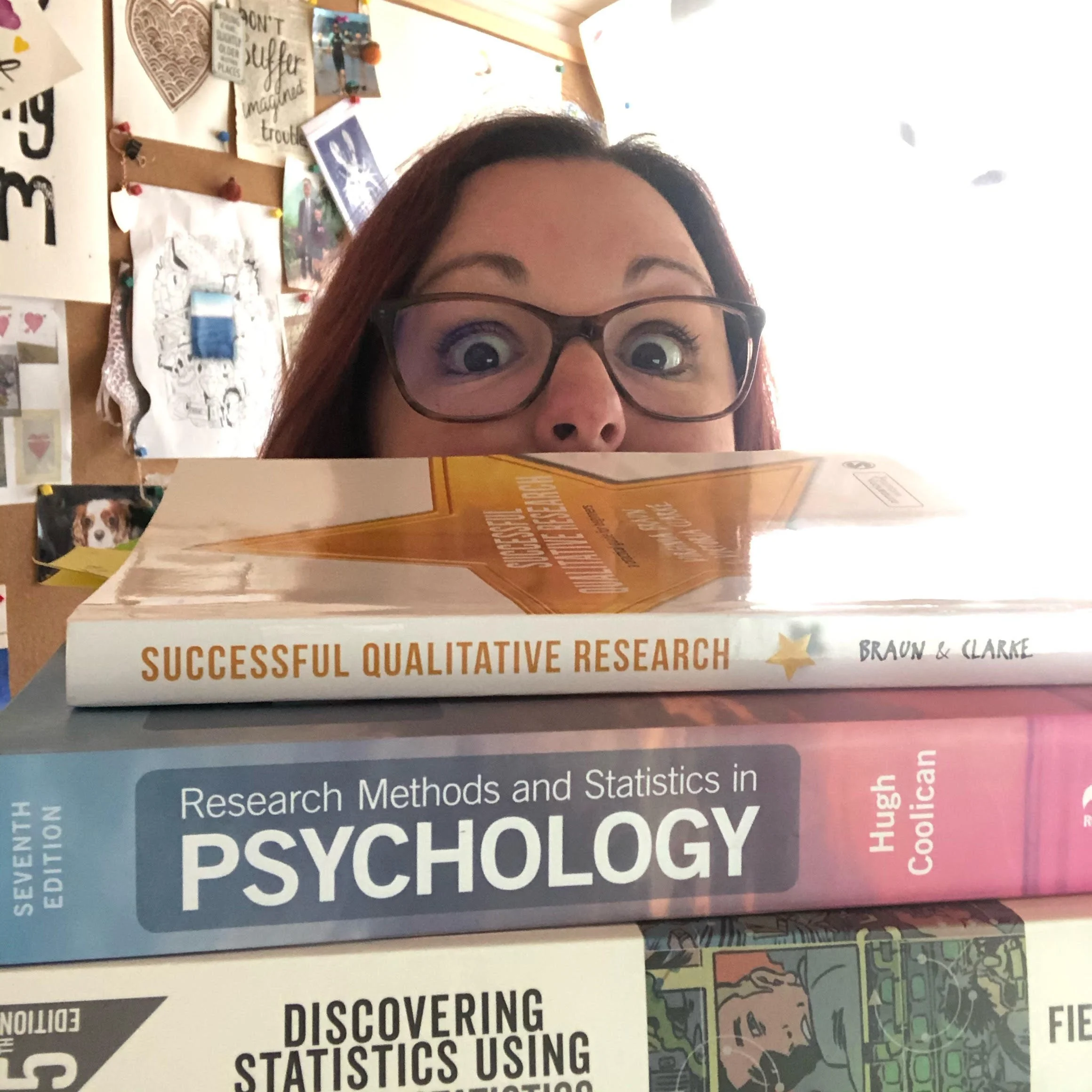
From what I've noticed, psychology has a habit of pathologising experiences that are developmental. I'm totally going to come across as someone who's been on a course about this and wants to share (I've been reading a lot for my Masters and I need a place to offer these thoughts - bear with).
Midlife “stuck-ness” is often framed as a motivation problem, a resilience issue, or a lack of gratitude. But research into adult development suggests something very different: midlife is a period where earlier identities are often outgrown, while new ones have not yet fully formed. Bit like that strange no-mans land of late teens.
Erik Erikson described adulthood as a sequence of psychosocial stages, with midlife characterised by tension between generativity (contributing, guiding, caring) and stagnation (feeling stuck, unproductive, or disconnected from meaning) (Erikson, 1950; 1968). When this tension isn’t consciously navigated, I think stagnation and "stuck-ness" looks like restlessness, irritability, fatigue, or quiet dissatisfaction (grumpy old git?!).
Research in lifespan and narrative psychology has shown that adults continue to revise their identity well into midlife and beyond (McAdams, 2001; McLean & Pratt, 2006). Identity isn’t fixed in early adulthood, it evolves as roles, values, bodies and responsibilities change. Do most of know this but just never really verbalise it?
So when capable adults feel stuck, it’s often not because something has gone wrong. It’s because something has shifted.
Misalignment, not failure
One of the most helpful distinctions I introduce to clients is the difference between failure and misalignment.
Failure implies you didn’t try hard enough, didn’t want it enough, or made poor choices. Misalignment suggests that what once fitted no longer does. I know I'd prefer to see myself as a little "skew-wiff" than "broken".
I've read (a lot?) around research on values and wellbeing - it seems to consistently shows that psychological distress increases when people live in ways that are inconsistent with their evolving values (Sheldon & Elliot, 1999; Hayes et al., 2012). Importantly, values are not static. What mattered in your twenties or thirties may not carry the same weight in your forties or fifties - do you ever remember being taught that your values could change or even what they were to start with? No, me neither.
I identify alongside the high-functioning adults that I work with - we built our lives around external markers of success, achievement, security, approval, responsibility, because those were adaptive at the time and the "right" thing to do. They helped you survive, provide, progress. But I've found and observed in others, that midlife often brings a recalibration. The internal question becomes less “Can I do this?” and more “Do I still want to?”
When life keeps asking you to perform an identity you’ve outgrown, friction is inevitable.
Identity lag: when life moves faster than the self
A concept I often use, because it because a repeating pattern of observation from my coach perspective (and then read about it!), is identity lag, the gap between who you’ve become internally and the life structures that still reflect an earlier version of you.
Sociologist Herminia Ibarra describes this in her work on career and identity transition. She notes that adults often remain “stuck between identities,” holding onto old roles while experimenting cautiously with new ones, particularly during midlife transitions (Ibarra, 2003; 2015). The problem isn’t lack of ability; it’s that identity change lags behind responsibility.
You can be outwardly competent while inwardly outdated.
This lag is compounded by the fact that midlife is typically a period of maximum responsibility load. Careers peak. Children need support. Parents age. Financial commitments are high. There’s little slack in the system for experimentation or reflection. It's indulgent and selfish when there's so much to compromise or sacrifice if you do.
So the very people who most need space to re-author their identity are often the least able to step away.
Responsibility overload and decision fatigue
Add to this the cognitive and emotional load of midlife, and it’s no surprise people (us mid-lifers) feel stuck.
Baumeister et al. (1998) wrote about decision fatigue showing us that prolonged responsibility and high-stakes decision-making reduce cognitive flexibility and increase avoidance. Errrrr... yup! When every choice feels consequential, for your family, your finances, your future, it becomes easier to stay put than to risk movement.
I think this is especially true for people who are used to being “the capable one.” When competence becomes part of your identity, uncertainty can feel threatening. Asking “What do I want?” risks destabilising roles you’re relied upon to maintain. And who are you to "rock the boat" now?!
So stuck-ness becomes a holding pattern. Not because you’re lazy or unmotivated, but because the system you’re embedded in leaves very little room to pause. Rubbish.
Midlife as a developmental threshold
From a developmental perspective, midlife is less a crisis and more a threshold.
Jung famously described midlife as the point where the task shifts from adaptation to the external world toward integration of the self (Jung, 1933). Yes that's a very old reference but while some of his language is dated, the core idea remains supported by contemporary psychology: meaning, coherence, and authorship become central psychological tasks in midlife (Ryff, 1989). I'd skim read something by Daniel McAdams’ work on narrative identity across adulthood but didn't feel authorised to cite him here just yet. I think I need to keep digging on this one...
I also think this is why goal-setting and productivity tools often stop working at this stage. They assume a stable sense of self. Midlife frequently disrupts that assumption. And let's be honest, us capable high-functioning mid-lifers have many a strategic tool in our toolkit... we're just not sure we're allowed to use them for ourselves and what we want now.
The question isn’t “How do I push myself forward?” It’s “Who am I now, and what deserves my energy?”
Why this matters
When capable adults misunderstand midlife stuck-ness as failure, they often respond by trying harder, adding more pressure, or judging themselves for not being grateful enough. I've watched this deepen the problem, not just for myself but those I coach.
When it’s understood as a signal of misalignment and identity lag, something shifts. Stuck-ness becomes information, not indictment.
This is where real change starts. I'm no "Insta-coach" here to sell you the big dream of burning it all to the ground, selling up and moving to the Caribbean (unless that's what you really want to do?!). I'm here to help with authorship. Slowing down enough to examine which parts of your life still fit, and which were built for a version of you that no longer exists.
Feeling stuck in midlife is pretty common, I hate to say it but you're not unique here. What is unique and something I'm always in awe of is those that actively choose to pause, explore and do something about it. To those who see their identity has outgrown or in some sort of misalignment with their life, I doth my cap. You're choosing to attend to what your next chapter needs. To be written consciously, by you and not inherited by default.
References if you're interested:
Baumeister, R. F., Bratslavsky, E., Muraven, M., & Tice, D. M. (1998). Ego depletion: Is the active self a limited resource? Journal of Personality and Social Psychology, 74(5), 1252–1265.
Erikson, E. H. (1950). Childhood and society. New York: Norton.
Erikson, E. H. (1968). Identity: Youth and crisis. New York: Norton.
Hayes, S. C., Strosahl, K. D., & Wilson, K. G. (2012). Acceptance and commitment therapy: The process and practice of mindful change (2nd ed.). New York: Guilford Press.
Ibarra, H. (2003). Working identity: Unconventional strategies for reinventing your career. Boston: Harvard Business School Press.
Ibarra, H. (2015). The authenticity paradox. Harvard Business Review, 93(1–2), 52–59.
Jung, C. G. (1933). Modern man in search of a soul. London: Routledge.
McAdams, D. P. (2001). The psychology of life stories. Review of General Psychology, 5(2), 100–122.
McLean, K. C., & Pratt, M. W. (2006). Life’s little (and big) lessons: Identity statuses and meaning-making in the turning point narratives of emerging adults. Developmental Psychology, 42(4), 714–722.
Ryff, C. D. (1989). Happiness is everything, or is it? Explorations on the meaning of psychological well-being. Journal of Personality and Social Psychology, 57(6), 1069–1081.
Sheldon, K. M., & Elliot, A. J. (1999). Goal striving, need satisfaction, and longitudinal well-being: The self-concordance model. Journal of Personality and Social Psychology, 76(3), 482–497.