Permission: the invisible thing keeping capable people stuck
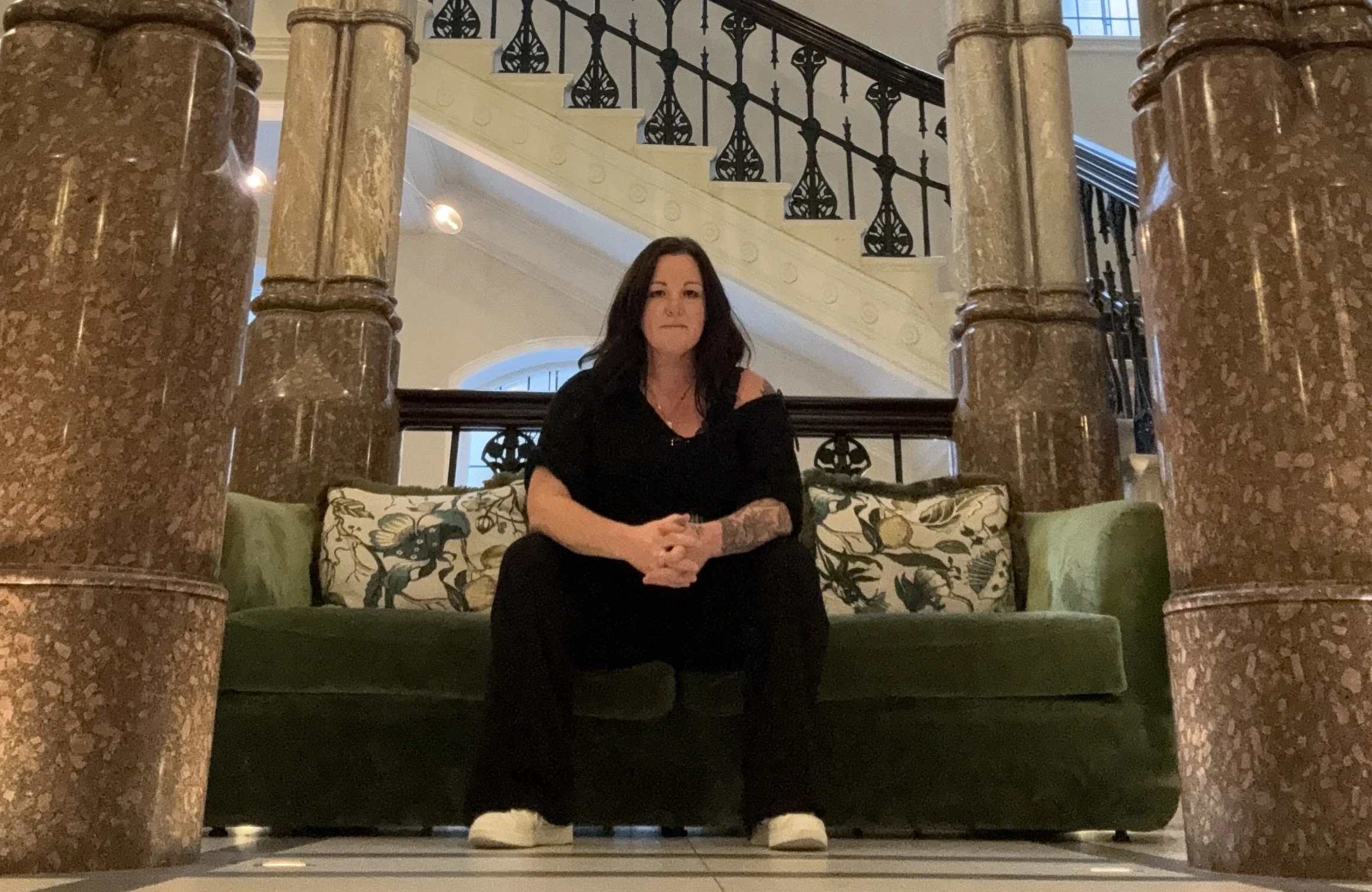
The quiet version of stuck
Lately, a theme keeps showing up in conversations with clients: permission.
Not in a dramatic, obvious way. More in the quiet, frustrating kind of way. The kind where someone can clearly articulate what they want, what isn’t working, and even what needs to change… and yet nothing moves. It often sounds like: “I know what I want to do, but I just can’t seem to do it.” Or, “I feel like I need to know it’s okay first.”
When we slow that down, the question underneath is rarely about what to do. It’s much closer to: who am I waiting for permission from?
Who are we actually waiting for?
For many people, the answer isn’t clear. You can see them mull it over when asked. "Actually, I'm not too sure, is it me?!". It might be a boss, a partner, or an internalised voice from much earlier in life. Sometimes it’s “society” or an unspoken set of rules about what’s acceptable. But more often than not, the permission they’re waiting for now is their own.
The challenge is that permission isn’t just a logical decision. It is usually tangled up with emotion. Choosing differently can mean risking disapproval, letting go of a version of yourself that once worked, or stepping into uncertainty without a clear guarantee of how things will land. It feels unsafe or slightly abstract - permission, from ourselves?!
I've observed and personally felt how it can bring guilt, doubt, grief, or even a strange sense of exposure. So from the outside, someone might look capable, maybe a little stuck, but internally they’re navigating something much more complex.
Why permission feels so difficult
From a psychological perspective, this makes sense. Self-Determination Theory suggests that we function best when our needs for autonomy, competence and relatedness are supported (Ryan & Deci, 2000). In simple terms, we need to feel that our life is, at least in part, ours; that we can cope with what’s ahead; and that we still belong. I'm not convinced that many of us are taught that, really know that and own it and this is where this issue stems from.
When acting on what we want threatens any of those, it becomes much harder to move, even when the direction feels clear. Permission also has a history. Most people don’t randomly decide they’re not allowed to want what they want. They’ve learned, often over time, that being good means being easy, that being valued means being useful, or that being safe means not rocking the boat. They become highly capable, responsible, and reliable… and gradually lose touch with what is actually theirs to choose.
Insight isn’t the problem
This is where the work shifts. I've found that it's rarely about giving someone more insight. Most people already know, on some level, what isn’t working. The difficulty is that insight alone doesn’t override old learning or dissolve fear. With my research hat on, coaching psychology shows that change is supported by factors such as self-efficacy, motivation and the quality of the relationship, not just having a plan (Theeboom et al., 2014; de Haan et al., 2020). In other words, people don’t just need clarity. They need enough internal safety to act on it. That's where people like me come in.
The role of psychological flexibility
This is where psychological flexibility becomes important. If I had a magic wand, this is the thing I would offer to the world. Within Acceptance and Commitment Therapy (ACT), psychological flexibility refers to the ability to stay in contact with thoughts and feelings without being driven by them, and to take action guided by values rather than avoidance (Hayes et al., 2006). So, the goal isn’t to remove fear, guilt, or uncertainty, but to reduce their influence over decision-making. When people are less entangled in those internal experiences, movement becomes more possible. And in my experience, it works.
Permission is not the same as confidence
This matters because I often hear clients say "oh i just need a bit more confidence to do that" and still don't take action; they stay stuck. Many people assume they need to feel certain, ready, or fully aligned before they act. In reality, we know that confidence often follows action rather than precedes it. A large part of the work is learning to take small, values-aligned steps while still feeling unsure, and building trust in yourself through that process. Get comfortable being uncomfortable as the cool kids say. This links closely to self-efficacy, which has been consistently associated with better outcomes in coaching and behaviour change (Bandura, 1997; Theeboom et al., 2014).
What actually needs working on
So when permission is the issue, my work is never about pushing the client harder or doing more. It is more often about developing a different relationship with yourself.
That might involve strengthening your sense of autonomy, building self-compassion so that fear isn’t met with criticism, increasing psychological flexibility so that discomfort doesn’t automatically stop you, and gradually building self-efficacy so you trust your ability to cope with what comes next. And sometimes, it involves acknowledging a type of personal grief. Because choosing differently often means recognising that something no longer fits, or perhaps never fully did. It's the shift many clients weren't expecting, but needed.
So what is permission, really?
I urge you to think about what permission means to you. I don't think it's a certificate or a green light from someone else. It isn’t the absence of fear or doubt. It is the moment you stop arguing with what you already know and decide to take it seriously.
It is quieter than people expect. Less dramatic. But often far more significant. Mostly because many capable people are not stuck because they lack direction. They are stuck because becoming the person who is allowed to choose that direction feels unfamiliar.
And that is a different type of work and maybe where you need to start.
Here's the references if you want to dig a bit deeper yourself:
Bandura, A. (1997). Self-efficacy: The exercise of control. New York: Freeman.
Deci, E. L., & Ryan, R. M. (2000). The “what” and “why” of goal pursuits: Human needs and the self-determination of behaviour. Psychological Inquiry, 11(4), 227–268. https://doi.org/10.1207/S15327965PLI1104_01
de Haan, E., Duckworth, A., Birch, D., & Jones, C. (2020). Executive coaching outcome research: The contribution of common factors such as relationship, personality match, and self-efficacy. Consulting Psychology Journal: Practice and Research, 72(1), 1–18. https://doi.org/10.1037/cpb0000165
Hayes, S. C., Luoma, J. B., Bond, F. W., Masuda, A., & Lillis, J. (2006). Acceptance and commitment therapy: Model, processes and outcomes. Behaviour Research and Therapy, 44(1), 1–25. https://doi.org/10.1016/j.brat.2005.06.006
Theeboom, T., Beersma, B., & van Vianen, A. E. M. (2014). Does coaching work? A meta-analysis on the effects of coaching on individual level outcomes in an organisational context. The Journal of Positive Psychology, 9(1), 1–18. https://doi.org/10.1080/17439760.2013.837499
Neff, K. D. (2003). Self-compassion: An alternative conceptualisation of a healthy attitude toward oneself. Self and Identity, 2(2), 85–101. https://doi.org/10.1080/15298860309032